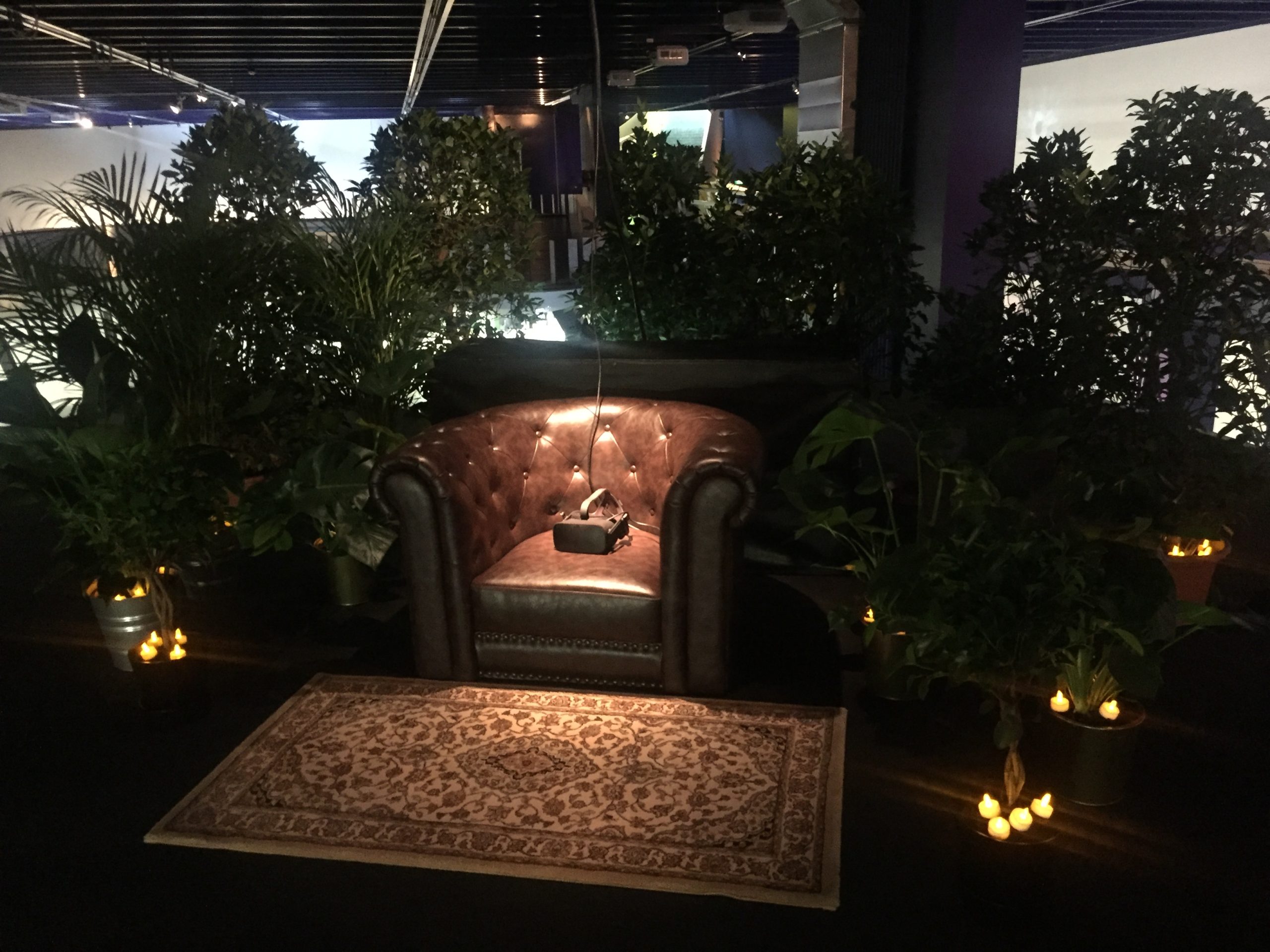
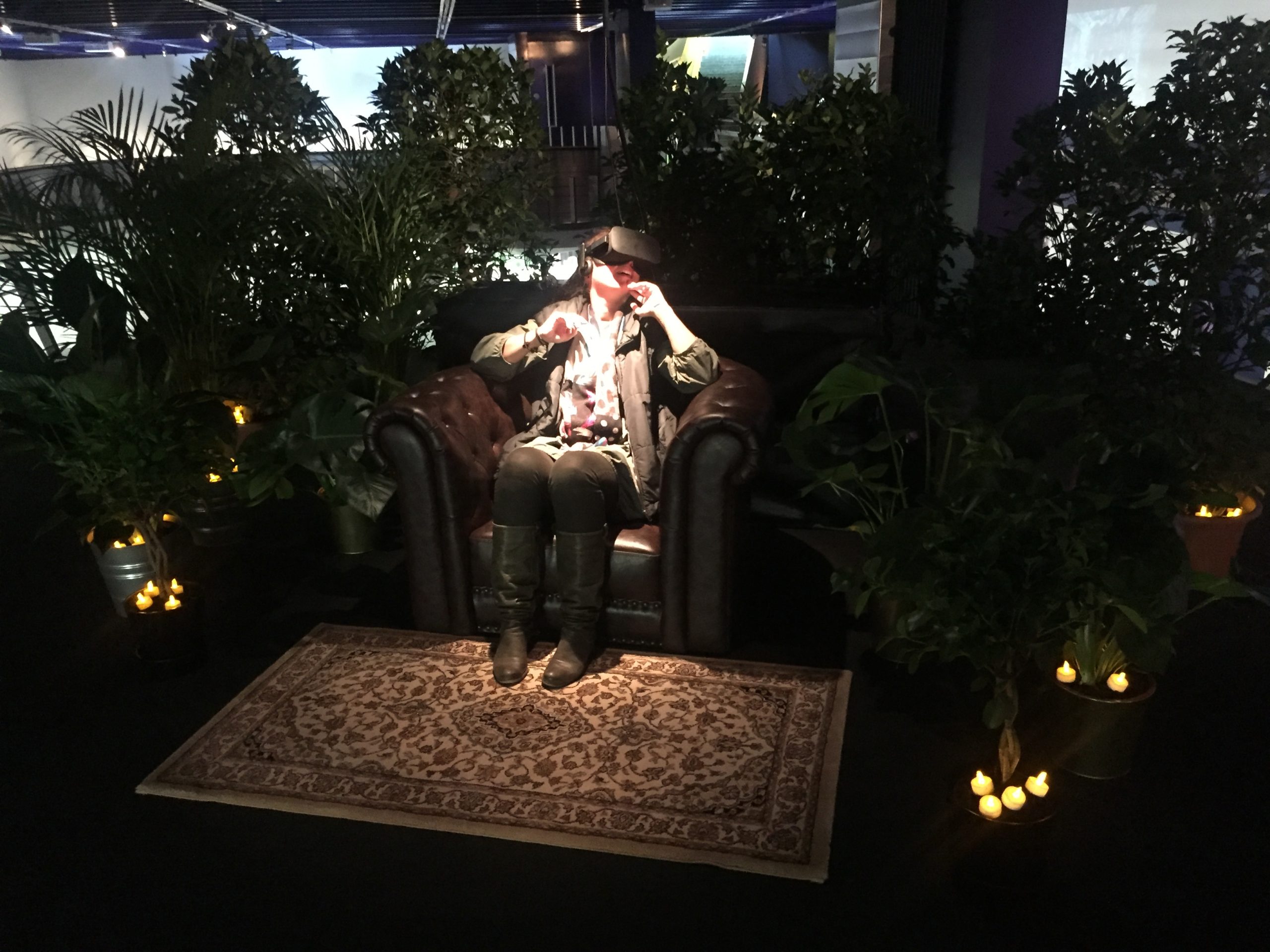
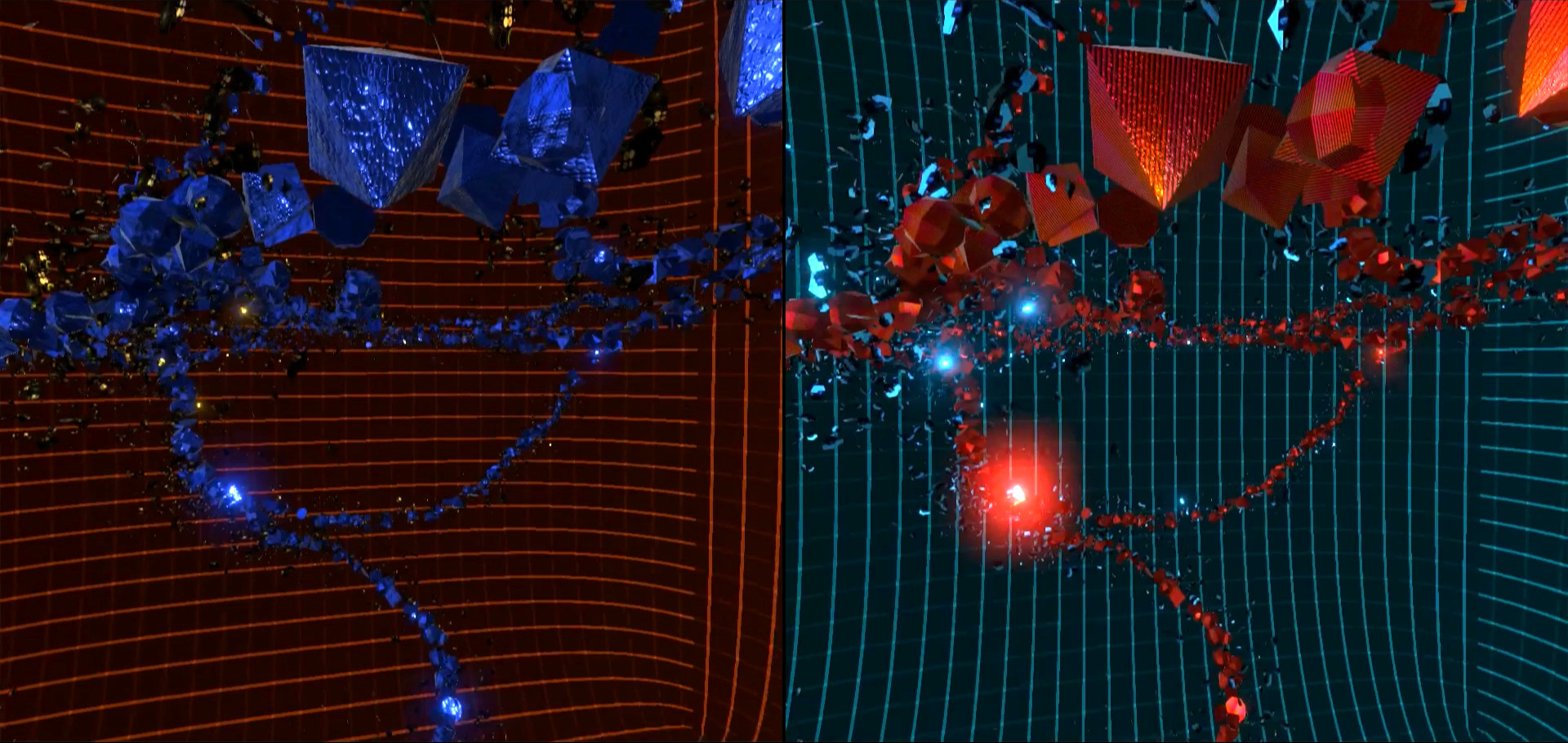
Year: 2017. Technique: Custom software, Virtual Reality. Medium: Virtual Reality Installation (duration 10mins).
“Fight is a seminal piece, … one of the most compelling (and mind bending) pieces I’ve seen in VR.”
– Robin McNicholas, founder of Marshmallow Laser Feast.
“oh dude… that’s fucked… ugh… AAAAAH… MOTHER FUCKER… oh shit… (the music is beautiful)”
– Golan Levin, Professor of Electronic Art, Director of Frank-Ratchye STUDIO for Creative Inquiry, Carnegie Mellon University.
“We see things not as they are, but as we are.”
The picture we see in our conscious mind is not a mirror image of the outside world, but is a reconstruction based on our expectations and prior beliefs.
I go much deeper into the motivations behind this work in this essay, and in this presentation: 2019 – Part 3 “We see things not as they are, but as we are”.
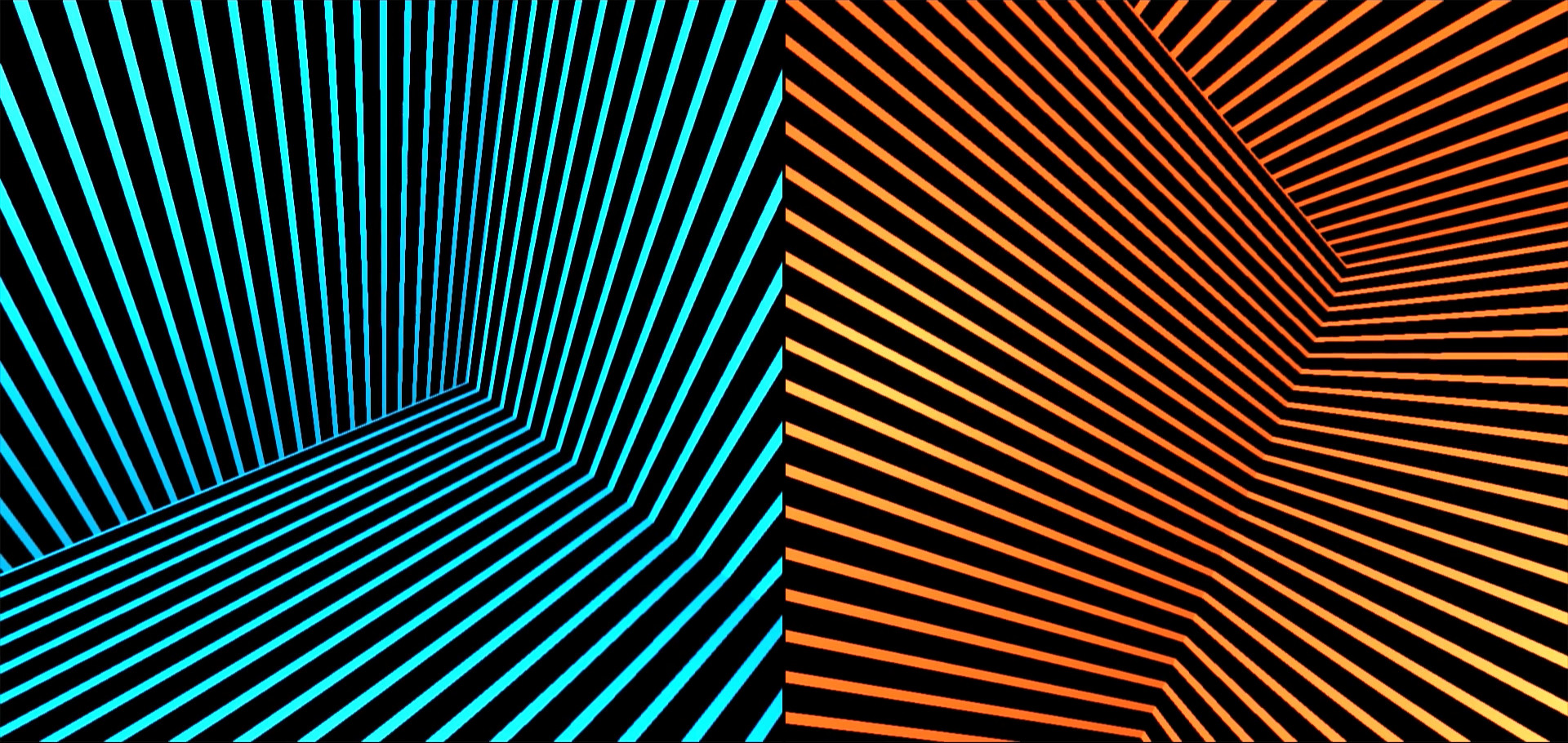
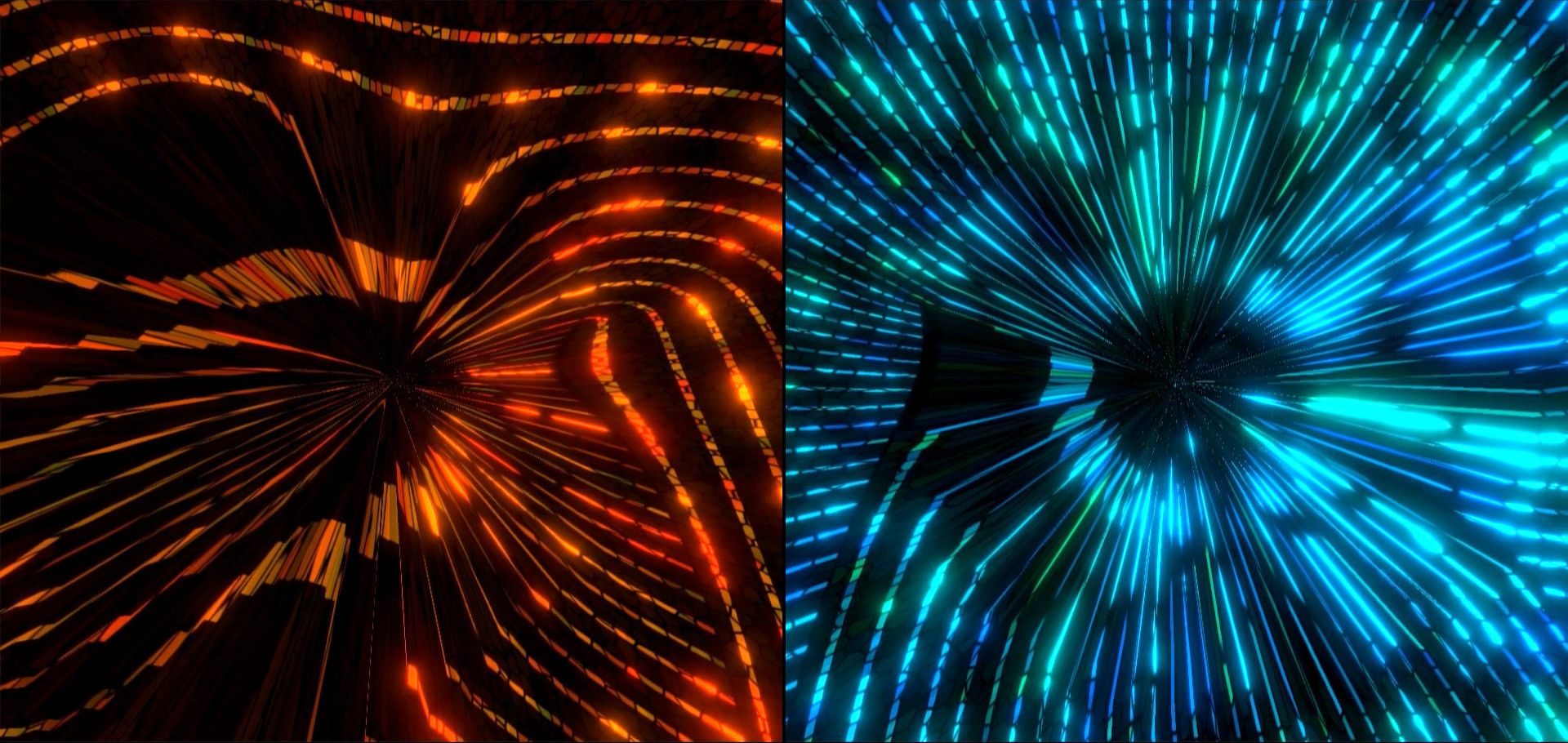
FIGHT! is a Virtual Reality artwork that presents radically different images to the viewer’s left and right eyes, producing a phenomenon known as binocular rivalry. The viewer’s conscious experience is not a simple blend of the two images, as one might expect, but an unstable, animated patchwork of irregular swipes, flickers, and transitions that unfold unpredictably, shaped entirely by the viewer’s own physiology. In their mind’s eye, each viewer ‘sees’ something unique, even though everyone is presented with the same imagery. Your conscious visual experience of the piece is different to mine, and it’s impossible for me to ‘see’ what you ‘see’, and for you to ‘see’ what I ‘see’. And what we both see, is radically different to what is actually presented to us.
The piece turns vision itself into contested ground, confronting the viewer with irreconcilable imagery that exposes perception as a fragile, unstable negotiation between reality and experience.
The work operates on several levels. On one level, the work explores the nature of perception and consciousness, and how we experience the world through our senses.
On a deeper level, this mirrors how we make meaning and construct our ‘reality’. How our individually biased viewpoints, our self-affirming cognitive biases, our inability to see the world from others’ point of view, can result in social and political polarization. The important question isn’t only “when you and I look at the same image, do we see the same colors and shapes”, but also “when you and I read the same article, do we see the same story and perspectives?”
Finally, the work questions, and implicates, the role of the technologies themselves in this process.
Motivations
Throughout the 2010s, I started noticing a dramatic increase in social and political polarization, in my birth country of Turkey, in my home (at the time) UK, in the US, and across the globe. In response to this, I started making work using emerging technologies to reflect on our own cognitive biases, and how they affect our ability to empathize with others.
- What we perceive to be real, what we see, is a reconstruction in our minds, a simplified model of the world, limited by our biology and physiology,
- Perception, including vision, is an active process, it requires action and integration
- The actions that we take, affects the reality and the meaning that we construct in our mind;
- Perhaps most importantly: even when presented with the same information, the same images, everybody will experience — will see — something unique and personal, which nobody else can see or maybe even understand.
- I’m interested in these ideas at a low-level, regarding our senses, particularly vision, and perception. But also conceptually at a higher level regarding how we make meaning and what we consider to be truth; our biases and prejudices, how we interact with each other as a result of this, and its impact on society and politics. Especially it seems right now our societies are torn more than ever, at least within my almost half a century of existence. And these gaping wounds seem to me to be partially the result of our clear inability and refusal to see the world from other peoples perspectives.
FIGHT explores these themes using Virtual Reality (though the experience is as opposite as one can get to VR), Binocular Rivalry and various interaction models inspired by these ideas.
The act of looking around and exploring the rival stimulus allows the viewer to probe which sections of each signal becomes dominant and which is suppressed, further underlining the notion that seeing – and in broader terms, sensing and perception in general – is an active process, driven by movement, expectations and intent.
I have no idea what anybody ‘sees’ when they experience this work, even though everyone is presented with the same visuals. Of course one might point out that this is actually the case with everything. When you look at any image, or read any piece of text, or even as you read these very words, I have no idea what they mean to you — but that’s at a semantic level. Here I wanted to try and create something where the conscious visual experience itself is different for everyone.
Everybody literally sees something unique.
Acknowledgements
Commissioned by STRP
Score by Rutger Zuydervelt (Machinefabriek)
Producer: Juliette Bibasse
Assistant: Rob Homewood